Orland Builders Inc. by Local Experts
Home Builder Trends: What's Shaping the Future of Home Construction?
The world of home construction is changing at a rapid pace. Significant trends are taking shape, fueled by technological progress and changing consumer demands. Advanced home technology, green building materials, and versatile designs are driving the movement. Since homebuyers are placing greater emphasis on energy efficiency and flexibility, builders are compelled to meet these needs. These changes spark critical discussions about the evolution of residential design and what it means for local communities. How will the homes of tomorrow ultimately be shaped?
Incorporating Home Automation Technology in Construction
In the past few years, a major transformation has taken place in the construction industry as home builders increasingly embrace smart home technology. This development highlights a increasing consumer demand for homes outfitted with advanced systems that improve energy efficiency, convenience, and security. Systems such as smart thermostats, automated lighting, and integrated security systems are becoming standard in new builds, permitting homeowners to manage their homes remotely through mobile apps.
Construction professionals acknowledge that integrating smart technology enhances property value significantly but also appeals to tech-savvy buyers. The integration of Internet of Things (IoT) devices enables smooth interaction between home systems, fostering a more integrated lifestyle. Moreover, builders are working alongside tech organizations to ensure that systems remain intuitive and aligned with future innovations. As the market evolves, the embrace view details of smart home technology is set to transform contemporary lifestyles, making it a crucial consideration for future construction projects.
Green Building Materials in Residential Construction Trends
The growing emphasis on smart home technology is matched by a parallel focus on sustainable building materials in home construction. Building professionals are placing greater importance on eco-friendly options, acknowledging their importance in reducing environmental impact and enhancing energy efficiency. Materials such as reclaimed wood, bamboo, and recycled steel are gaining popularity, reflecting a movement toward resource conservation and sustainability.
In addition, developments in energy-efficient windows and insulation lead to reduced energy consumption, reflecting the goals of sustainability-focused homeowners. Incorporating sustainable materials not only fulfills industry requirements but also appeals to a audience that embraces environmental stewardship.
As buyers grow increasingly conscious of their carbon footprints, contractors are adapting by selecting eco-friendly materials that cut down on waste and support healthier living conditions. This trend signifies a broader commitment to sustainability in the construction industry, showing that today's homes can achieve both technological sophistication and environmental harmony.
Creating Adaptable Floor Plans for Contemporary Living
As more homeowners look for adaptability in their living spaces, creating adaptable floor plans has become essential in today's construction industry. These adaptable layouts cater to diverse lifestyles and evolving family requirements, allowing spaces to serve multiple purposes. Open-concept designs are popular, facilitating seamless changes between living, dining, and kitchen areas, while also empowering homeowners to restructure their spaces whenever necessary.
Integrating adjustable walls or versatile furniture greatly improves flexibility, facilitating everything from personal workspaces to guest quarters. The rise of distance working has likewise affected these layouts, encouraging contractors to create purposeful work areas that can effortlessly shift into relaxation spaces. In addition, storage solutions that enhance practicality without compromising design integrity are fundamental in these adaptable layouts.
Fundamentally, the trend towards multi-functional design approaches signifies a deeper change in the manner in which people structure their lives, reinforcing the demand for homes that are designed to accommodate evolving lifestyles and priorities.
Energy Conservation and Eco-Friendly Certifications
The growing attention to energy efficiency in home building has driven the growing adoption of sustainable building materials and smart home technologies. Such approaches not only lower environmental footprint but also elevate the total quality of residential environments. As consumers become more environmentally conscious, green certifications are gaining importance in the housing market.
Sustainable Building Materials
With the increasing demand for sustainable construction methods, sustainable building materials have emerged as an essential element in improving energy performance and achieving green building certifications. These resources, including repurposed steel, bamboo, and reclaimed timber, play a role in reducing environmental strain and cutting carbon output. Additionally, advancements in insulation and energy-efficient windows further improve a building's overall performance. Many builders are now seeking certifications such as LEED and BREEAM, which not only demonstrate their sustainability efforts but also resonate with environmentally aware purchasers. By focusing on green building materials, home constructors can design properties that lessen ecological impact while supporting healthier living conditions. This transition not only satisfies regulatory requirements but also resonates with the priorities of an expanding group of property buyers.
Smart Home Technologies
A substantial shift in the direction of smart home technologies is revolutionizing the domain of green certifications and energy efficiency in residential construction. These technologies empower homeowners to monitor and control energy consumption through connected systems, optimizing their usage patterns. Smart thermostats, lighting systems, and appliances lead to reduced energy waste, considerably lowering utility costs and reducing environmental impact.
Moreover, several smart home innovations are engineered to adhere to eco-friendly certification requirements, such as Energy Star and LEED. This certification alignment not only enhances a home's resale value but also draws in sustainability-minded homebuyers. As construction professionals increasingly embed smart features into their blueprints, the demand for sustainable living solutions continues to rise, shaping a more environmentally responsible future in home construction.
Multi-Generational Home Spaces: Designing with Everyone in Mind
With multi-generational living growing in popularity, home layouts are being transformed to address the varied needs of modern families. Versatile floor plans provide the flexibility needed, while private retreat areas offer personal space for individual family members. Furthermore, common shared spaces encourage connection and cooperation, improving the shared living environment across all age groups.
Adaptable Floor Plans
Versatile floor plans are increasingly essential in today's home planning, particularly for accommodating multi-generational living. Such flexible designs offer homeowners versatile spaces that can evolve to meet evolving household requirements. By including amenities such as open-plan zones, flexible walls, and versatile spaces, families can design spaces that encourage connection while preserving personal space. This flexibility supports various lifestyles, allowing households to pool assets without sacrificing personal ease. Furthermore, the growth of working from home has increased the need for purposeful home office spaces within these properties. As builders embrace these trends, the focus remains on designing homes that reflect the diverse needs of families, making certain that all residents have an appropriate environment in which to prosper.
Exclusive Retreat Zones
Creating secluded refuge zones within homes shared by multiple generations allows for a peaceful balance between shared living and private independence. Such purposefully planned areas serve the diverse needs of those living together, creating a refuge for personal rejuvenation or dedicated tasks. Intentionally crafted, these zones frequently feature elements such as comfortable reading corners, private home offices, or calm open-air retreats, fostering a spirit of self-sufficiency. Custom home designers are increasingly incorporating soundproofing and versatile design configurations to secure personal comfort and privacy. By emphasizing these personal sanctuary areas, families can strengthen their bonds while valuing every family member's need for independence. Above all, these structural considerations demonstrate a increasing recognition of the value of psychological wellness in homes accommodating multiple generations.
Shared Communal Spaces
The design of these environments focuses on accessibility and functionality, supporting the diverse needs of all generations. Integrating adaptable furniture and technology can boost functionality, creating opportunities for everyone to participate. As more families embrace this living arrangement, construction professionals are focusing more on collaborative shared spaces, understanding their value in establishing balanced living settings that nurture relationships while accommodating independence.
How Urban Growth Is Shaping Home Design?
In what ways does urbanization shape modern home design? Urbanization promotes a transition toward compact, multifunctional living areas, reflecting the need for efficient use of limited urban land. As metropolitan regions continue to develop, residences are frequently designed to optimize vertical space, including features like elevated spaces and integrated storage options. This shift places a premium on functionality, making certain that every square foot has a defined use.
In addition, cities promote the integration of green materials and energy-conscious technologies, as homebuyers consistently demand environmentally conscious choices. The heightened awareness of community also shapes home architecture, leading to the emergence of mixed-use properties that integrate residential and commercial spaces. Outdoor living areas, such as balconies and sky gardens, are becoming essential, providing green spaces for urban occupants. Ultimately, urbanization necessitates groundbreaking design concepts that cater to the shifting preferences of city residents while promoting sustainability and community interaction.
Design Trends Shaping Contemporary Home Building
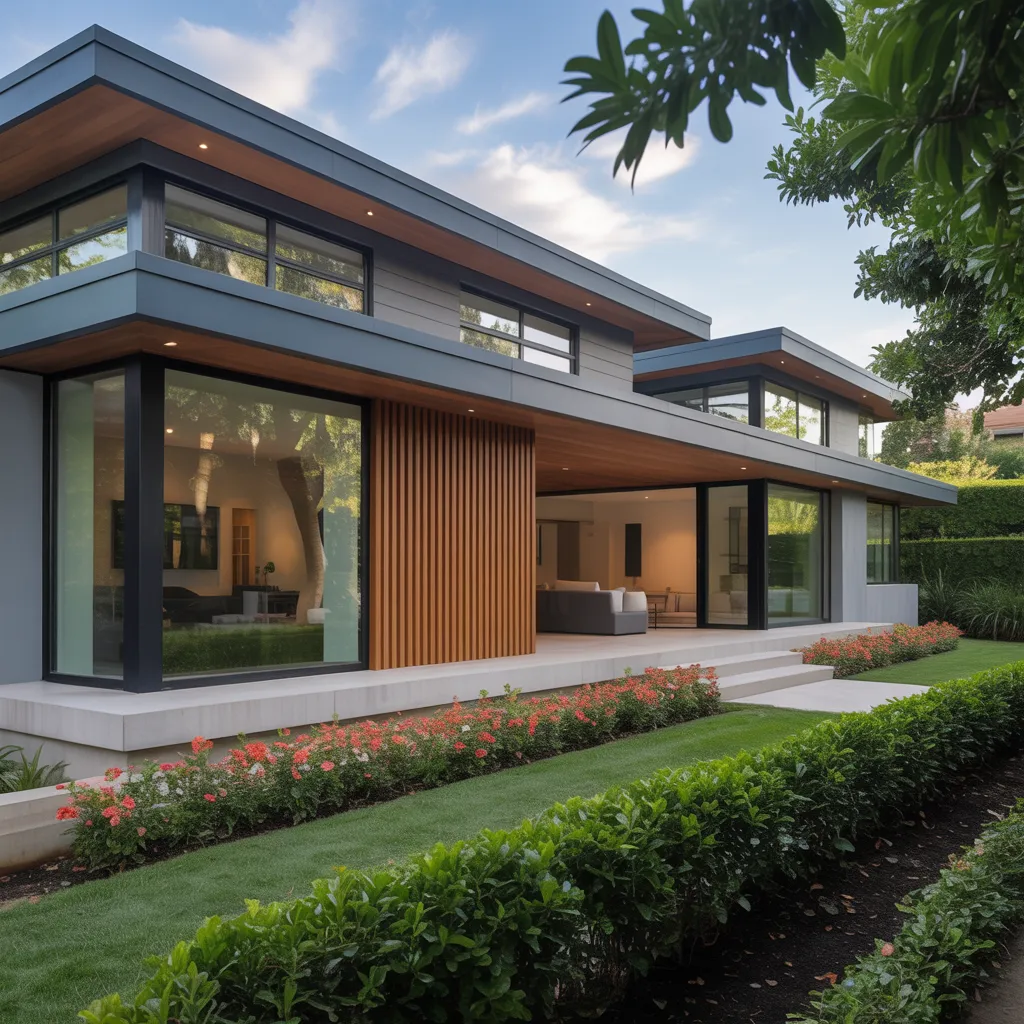
What aesthetic movements are defining modern residential construction today? Contemporary residential designs increasingly emphasize minimalism, blending functionality with simplicity. Crisp lines, expansive open spaces, and neutral color schemes prevail, fostering a feeling of calm and openness. Furthermore, the incorporation of natural elements, including wood and stone, strengthens a bond with nature, mirroring an increasing desire for sustainability and environmental responsibility.
Architectural elements like large windows and eco-friendly rooftops are becoming more prevalent, allowing for abundant natural light and improving energy performance. Additionally, the integration of advanced home automation corresponds to aesthetic trends, merging form with cutting-edge functionality.
In city environments, mixed-use projects are gaining popularity, merging housing with retail and entertainment districts, creating vibrant communities. Ultimately, these design movements not only reshape the look of residences but also cater to modern living demands, setting the stage for contemporary lifestyles that balance elegance and utility.
Common Questions and Answers
How Do Home Builder Trends Affect Property Values?
Home builder trends greatly influence home values by boosting attractiveness through contemporary aesthetics, eco-friendly solutions, and intelligent systems. As interest in cutting-edge amenities grows, residences that embrace these advancements often see an increase in market worth.
What Role Do Government Regulations Play in Home Construction Trends?
Government regulations significantly impact home construction trends by establishing sustainability requirements, safety standards, and zoning laws. These regulations tend to impact design choices, materials used, and ultimately shape the market dynamics and property values in the sector.
In What Ways Is the Labor Shortage Influencing Home Building Projects?
The shortage of skilled labor considerably delays home building projects, driving up costs and restricting access to qualified workers. This scarcity challenges builders to adapt by implementing innovative construction methods and pursuing new labor resources to meet demand.
What Financing Options Are Available for New Home Construction?
Multiple funding options for new home construction include conventional loans, FHA loans, VA loans, construction-to-permanent loans, and personal loans. All options deliver specific benefits, serving different buyer preferences and financial backgrounds.
How Do Home Builder Trends Differ Across Regions?
Homebuilding trends vary considerably by locality, influenced by regional economies, weather conditions, and cultural influences. Urban areas tend to focus on eco-friendly designs and high-density living, while rural regions may focus on open spaces and conventional building designs.